In a world where information travels faster than truth, where fake news competes with facts, and where artificial intelligence is reshaping how societies consume and interpret information, the ability to distinguish credible information from misleading content has become more than a digital skill; it is a necessity for survival in the modern information age.
At the heart of this global challenge is the International Media and Information Literacy Institute (IMILI), domiciled in the National Open University of Nigeria (NOUN). From its humble beginnings in the university's Department of Mass Communication to its emergence as a UNESCO Category 2 Institute, IMILI represents a significant milestone in Nigeria's contribution to global media and information literacy advocacy, research, education and capacity development.
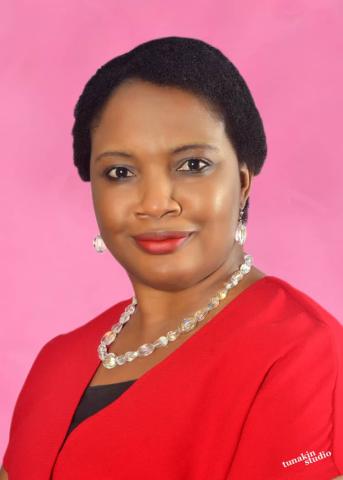
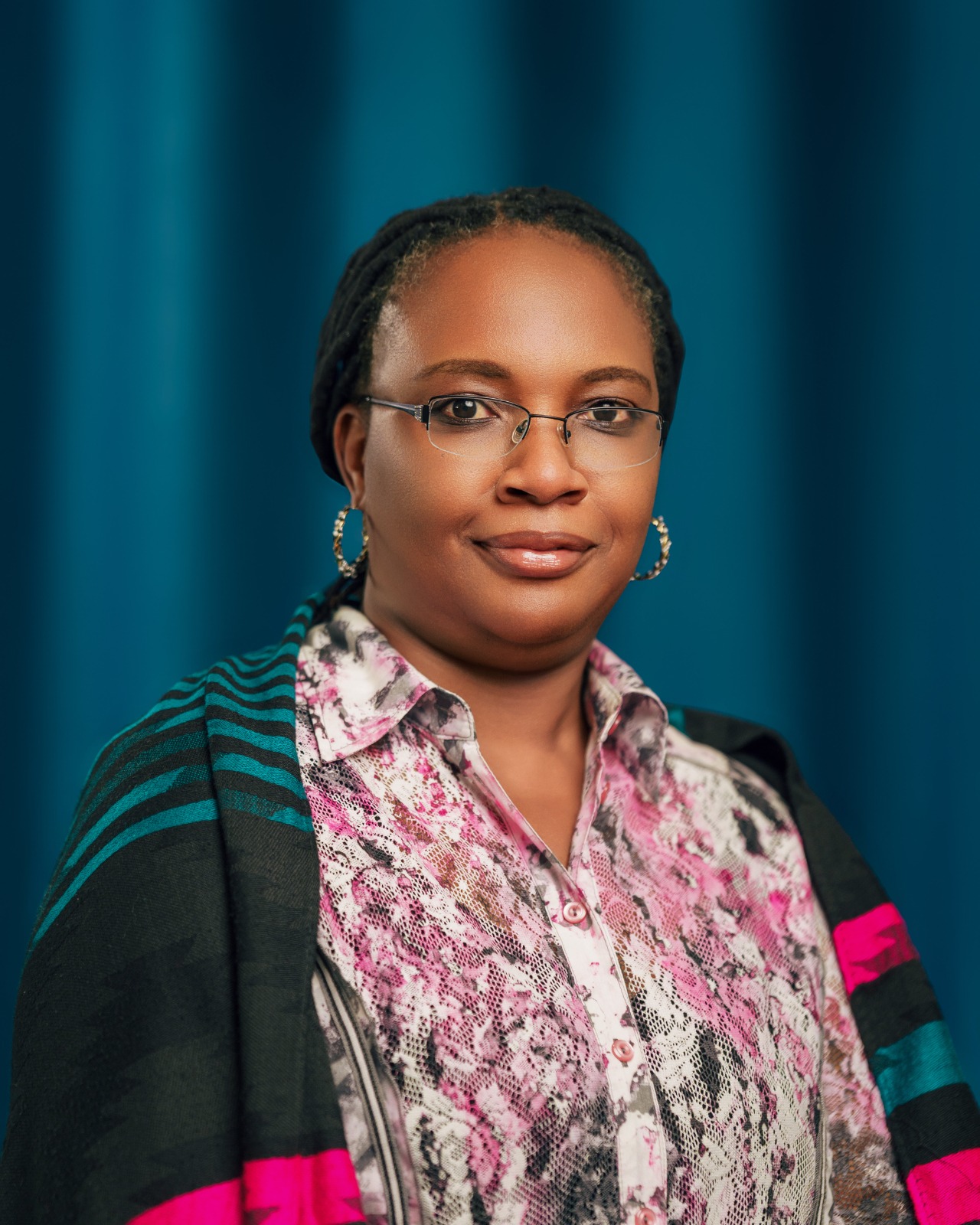
In this interview, the IMILI Director, Dr. Sharon Adetutu Omotoso, speaks on the institute's journey from its origins in NOUN's Department of Mass Communication to its emergence as an international centre for research, policy advocacy, training and capacity development in media and information literacy. She discusses IMILI's achievements since its official launch, its global partnerships, programmes, strategic priorities, and vision for addressing information disorder while promoting responsible engagement with digital platforms across Africa and the world. She also highlights the institute's ongoing efforts to empower content creators, strengthen media literacy, and foster a safer, more informed digital society. Excerpts:
Can you please introduce yourself?
I am Dr. Sharon Adetutu Omotoso, Director of the International Media and Information Literacy Institute at the National Open University of Nigeria (NOUN).
People still don't fully understand what IMILI is all about. Can you shed light on what IMILI does?
We cannot tell the story without referring to the Department of Mass Communication at the National Open University of Nigeria. It all began at the National Open University of Nigeria, with various research and work on media, digital, and information literacy.
As God will have it, Nigeria played host to the Global Media and Information Literacy Week in 2022, and many countries participated in the event.
The Abuja Declaration, which came to be, enjoined the world to commit to global financing of media and information literacy.
What does that mean? It's trying to call attention to the changes that we are seeing in our societies. The world is going digital, and the sheer amount of information has led to what we now call information disorder.
And we have all kinds of news, fake news, and hate speech out there. We have distorted videos, deep fakes, shallow fakes, and these connect with different kinds of situations within our communities. We talk about war and conflict across spaces.
We talk about migration issues, health disinformation issues. We talk about young people, their use of digital platforms, and how all of these come together, even in politics. They all cut across. And so, the digital space is taking over from our manual spaces and, of course, the conventional media, which means it must be a space we govern ourselves.
We ensure that we keep a safe society, even as we grow with the digital platforms and technologies - artificial intelligence - including all the benefits and challenges that come with it.
And so, reckoning with that, the Federal Ministry of Information and National Orientation became the pillar that led UNESCO to approve the very first International Media and Information Literacy Institute, which is now the first Category II institute in UNESCO's Communication and Information sector.
IMILI is expected to serve the global community, meaning that it is not just focusing on Nigeria. By implication, the very small institute that began as the Department of Mass Communication at the National Open University has to grow into a UNESCO Category II Institute. And what that also means is that it becomes an autonomous body that can serve Nigeria, the continent, and also serve the world in terms of research on media and information literacy, in terms of policy advocacy across countries, in terms of regional integration and cooperation, in terms of partnerships across countries, and of course, in terms of training and capacity building.
We should also not overlook the fact that this is a training institute that will offer programmes, you know, in different ways for different stakeholders. So that is IMILI in short.
It’s been eight months since your official launch as an institute. What have you done since then as an institute?
Eight months is too short to say what I have done; at the same time, eight months is too long not to say what has been done, so there is a lot that has gone into this. Of course, we all know that pioneering an institute is not easy. The IMILI of the past is no longer the IMILI of today.
There is a global expectation for today's IMILI, which means we need to begin working with stakeholders across countries. We are currently securing partnerships with different stakeholders from across the world.
Currently, I can proudly say that we have a partnership with the Wikimedia Foundation Nigeria. We have partnerships with the National Council for Children's Television in the Philippines; we have relationships with institutions in India; we have relationships with organizations and civil societies in Madagascar and Liberia; and many more are still coming. So we started from that point. We hosted the Global Media and Information Literacy Week for 2026 because we were tasked with overseeing developments on the Continent in that regard. And we worked with countries across Africa to organise their activities.
I must also mention that we floated a flagship programme in June, which is focusing on the continent and some of the events that are happening; we call it the Africa Against Xenophobia Project (AfAX-P), and that project has led us to a research side of it, where we currently have over 35 papers submitted for us to start out the first issue of the Global Journal on Media and Information Literacy (GJMIL). That journal, I am proud to let you know, will be published in four languages because we are in partnership with the University of Campinas in Brazil. And so we will all be working together from Morocco to Brazil and, of course, to other parts of the world. So the journal will be publishing in English, French, Portuguese, and Arabic. That is where we are starting with our academic journal.
And from the Africa Against Xenophobia Project, we also have submissions from young people working on peacebuilding, preparing materials, skits, videos, poems, and more, which we are currently assessing and advancing.
Of course, we have other projects in the pipeline; we are currently preparing for the election in Nigeria, and IMILI is also very interested in it. We hope to set up the Media and Information Literacy Situation Room, where we will examine the information landscape surrounding elections. We still have a lot to set up.
What impact is IMILI expected to make globally as an institute? You've mentioned some. Is there any more you want to say?
Oh, yes. There are expected impacts for IMILI; one of them is our policy advocacy.
We are working seriously towards getting countries to adopt or to prepare their policy on media and information literacy.
So we are looking forward to countries having national policies on media and information literacy. We are working with countries to ensure that media and information literacy becomes a part of the curriculum.
Currently, we are aware of the work our colleagues in Kenya are doing on the African Union Media and Information Literacy Policy, and, of course, we work with other regional bodies. We work with fact-checking organisations, you know, that are also working on any of these things.
We also have plans in the pipeline for the global community. And of course, we are still writing proposals and preparing our documents in that regard.
Is it safe to say that IMILI has had some impact on media and information literacy in Nigeria thus far?
I must say that eight months is too short to begin to do impact analysis. We are just setting out, and there is a lot that is going on. So I would say that the impact we are currently making is awareness.
People are beginning to recognise that Nigeria hosts the International Media and Information Literacy Institute. Nigeria is host to the very first Category II Institute on Media and Information Literacy (MIL) in the world.
And apart from that awareness, they are also beginning to reach out to us to see what we can do across countries.
Recently, we had our stakeholder dinner where we brought some different stakeholders together, and people are beginning to come to us to work with us, to partner with us, and this is just the beginning. Give us time; we will begin to shake the world in terms of media and information literacy.
Will IMILI offer courses, and what will the criteria be? What category of people are you targeting for enrollment?
We are targeting different stakeholder levels because the International Media and Information Literacy Institute is not limited to a particular sector; we work with all sectors. When you talk about media and information literacy, like I mentioned earlier, it cuts across issues: migration, health, politics, economy, you know, media- it's all over the place.
So we work with young people, with older people, with parents, with children, with adolescents, with youth, with civil society organisations, government bodies, So our courses will cut across all these sectors.
We are going to organise courses; short courses will be available. There will be academic programmes, certificate courses and most definitely postgraduate programmes, that can hone the skills of people around digital literacy, media and information literacy as the case may be.
What programmes do you have now and for the future?
We are still speaking with the management of the National Open University of Nigeria because we cannot do this on our own. We also have to set up Massive Open Online Courses, which we will put across spaces, allowing people to register for and take advantage of our courses.
And we know that the National Open University of Nigeria is a key strength in online, open, and Distance learning. So yes, we are still in conversation with the university and other stakeholders. And then very soon, you'll begin to hear about our programmes.
How have you organised IMILI to achieve its aims and objectives?
Organising IMILI has not been an easy task, I must say, because it's a transition. And that change can be problematic, especially because what used to be our local way of working is now taking on a global identity.
It can be really challenging, and that has to do with staffing, the government approvals we need to get things done in our work, and UNESCO as an international body; it's a lot. And so, I would say, pioneering is never easy. And I didn't think it was going to be easy. But I know it is a task that can be accomplished. And with all the support and all the hands-on deck, we can get it.
IMILI recently had a Media and Information Literacy Week. How were you able to make the week impactful? And what would you do differently next time to make it more impactful?
Okay, so we had the Global Media and Information Literacy Week. One of the impacts that we have made is the fact that on the first day of the event in Abuja, we met with secondary school students, and we were amazed that many of the students that we met have not even had contact with media and information literacy issues, which for us is a daunting task, meaning that there are still more things to do. And there are places that we need to cover. That's one.
The second one is the fact that we were not only able to work with things in our country, I mean, with people or issues in our country, but we were also saddled with the task of working across the continent. So we were able to share with our colleagues, NGOs, government organisations and institutions, the kinds of activities that they were doing in the area of media and information literacy. Collaboration is impact.
The fact that we can bring our colleagues together, encourage them to organise events in their various localities across the continent is something that is, I believe, impactful.
Taking leadership in that realm is an honour and a privilege we have found. And of course, going forward, we know there's a lot of work to do, as conversations with all these partners across the continent are ongoing.
In the area of social media, there’s a lot of misinformation and disinformation; you know, people post and share videos that aren't accurate. What can IMILI do to ensure that content creators have media and information literacy to share information that does not mislead people?
Okay, so I will say education, education, education, training, training; we cannot overemphasise it. And that is why IMILI is established. And I will say that we've been reaching out to different stakeholders.
Earlier in the year, we reached out to young politicians about how they develop their content and how they share political messages online. We co-hosted a training for them with the UNESCO Office in Abuja.
We've also had another event with Art for Humanity and the UNESCO office in Abuja, where we are still working with young social media content creators- trying to mentor them, trying to show them how to create content ethically and all of that. So our media and information literacy training cuts across different spaces, and we've been doing it. We have just started.
And by the time we get into the heart of it, going forward, we'll be able to reach a wider level of the populace, you know, going forward. So we are putting structures in place to do that. We will definitely reach content creators, journalists, market women, and people in religious spaces. We'll reach our traditional rulers; we'll reach people in policy. And of course, we'll be within the academic community. So our hands are full, and then we are hopeful.
- Log in to post comments
- 101 views