The National Open University of Nigeria (NOUN) is exploring the development of an artificial intelligence-powered counselling platform aimed at enhancing students’ academic performance, emotional well-being, and career development.
The proposed AIA MindMatch Counselling Platform, developed by Dr. Ibraheem Adebayo Adediran, a Senior Lecturer in Counselling Psychology, is designed to provide personalised guidance and psychological support to students across the university’s geographically dispersed learning community.
The proposal was presented to the Deputy Vice-Chancellor, Technology, Innovation and Research (TIR), Prof. Christine Ofulue, for consideration as a potential innovation to strengthen student support services and improve learning outcomes.
While welcoming participants at the presentation, the Director of the Directorate of Research Administration (DRA), Prof. Gloria O. Anetor, underscored the importance of research and innovation in addressing practical challenges within the university and the wider education sector.
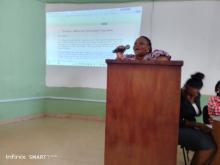
Presenting an overview of the project, Dr. Adediran explained that the platform was conceived to address some of the challenges associated with Open and Distance Learning (ODL), particularly limited access to regular counselling, career guidance and personalised academic support.
He noted that such challenges could contribute to stress, declining motivation, poor career choices and difficulties adjusting to independent learning, with possible consequences for students’ academic progress and completion rates.
According to him, the proposed platform would leverage artificial intelligence to generate personalised insights into students’ personalities, learning preferences, career options, strengths and areas requiring improvement. It would also facilitate referrals to professional counsellors where necessary.
Under the proposed arrangement, students would access the platform using their NOUN identification details and select their preferred language from English, Hausa, Yoruba, Igbo and Nigerian Pidgin.
They would subsequently undertake a 10- to 15-minute personality assessment based on the Myers-Briggs Type Indicator (MBTI), adapted to reflect the Nigerian learning environment.
The system is expected to generate individual profiles, development plans and progress-monitoring dashboards. It would also provide lecturers and university administrators with anonymous, aggregated information on learning patterns, student well-being and potential indicators of academic disengagement, thereby supporting evidence-based interventions.
Dr. Adediran stressed that the platform was not intended to replace professional counsellors but to complement their work by providing students with a digital entry point to guidance services and facilitating access to human support when required.
Responding to the presentation, Prof. Ofulue commended Dr. Adediran for the initiative, describing it as a promising example of how research, technology and innovation could be deployed to address practical challenges in the university system.

She observed that the proposed platform had the potential to widen access to counselling, promote students’ well-being and contribute to improved academic outcomes.
The DVC TIR encouraged the project developer to collaborate with the university’s Software Development Department to assess the proposal's technical requirements and feasibility and to identify possible pathways to its implementation.
She emphasised that combining expertise in counselling psychology with technical knowledge would be crucial to developing a reliable and effective platform that responds to the needs of NOUN students.
Also speaking, the Dean of the Faculty of Education, Prof. Ihuoma Chinwe P., acknowledged the relevance of the initiative, noting that effective counselling and guidance services were essential to students’ academic adjustment and personal development.
She observed that a technology-enabled platform could significantly extend the reach of counselling services, provided it was tailored to the realities of Nigerian learners and complemented existing educational practices.
Similarly, the Director of Counselling and Career Development, Dr. Sefinat Omuya, welcomed the proposal, highlighting its potential to strengthen career guidance and psychological support across the university.
She, however, stressed the importance of integrating the proposed platform with existing counselling services to ensure that students receive appropriate professional assistance.
Among the anticipated benefits of the platform are improved student retention and completion rates, enhanced career readiness, increased access to confidential counselling and a better understanding of students’ individual learning needs.
While the concept holds potential for wider application across Nigeria’s education sector, an initial pilot at NOUN would enable the university to assess its accuracy, usability, cultural relevance, and effectiveness before considering adoption by other institutions.
The pilot would also provide an opportunity to evaluate the platform’s impact on student engagement and academic outcomes, while ensuring adequate safeguards for data protection, confidentiality, informed consent and the responsible use of artificial intelligence.
The presentation ended with a proposal for further consultations on a possible pilot phase and collaboration with the Software Development Department, subject to the university’s technical assessment and approval.
- Log in to post comments
- 4 views