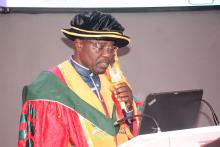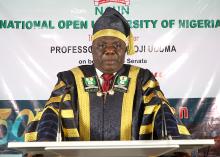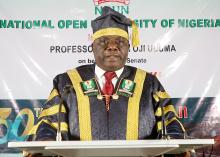
The Vice-Chancellor of the National Open University of Nigeria (NOUN), Prof. Uduma Oji Uduma, has called on the global education community to ensure that Artificial Intelligence (AI) enhances teaching and learning without undermining the human role in education.
Prof. Uduma made the call at the opening plenary of the UNU Macau AI Conference 2026, themed “AI × Education: AI for Learning, Learning for AI,” where he emphasised that humanity must remain at the centre of every AI policy, tool and innovation.
“AI should not be made to replace but assist human beings,” he declared. “In all we do with AI, let us put the human being at the centre. Let AI assist us. Let us interrogate information. And let us ensure that as education expands, humanity is not lost.”
The conference brought together policymakers, academics, researchers and young innovators from more than 114 network members across six continents to examine the growing impact of AI on teaching, learning and assessment.
Drawing on his experience in Open and Distance Learning (ODL), Prof. Uduma noted that technology had long served as a bridge to educational access, particularly in distance learning.
He said AI was expanding this potential by helping teachers reach more learners, supporting self-paced learning and making large classes more interactive and personalised.
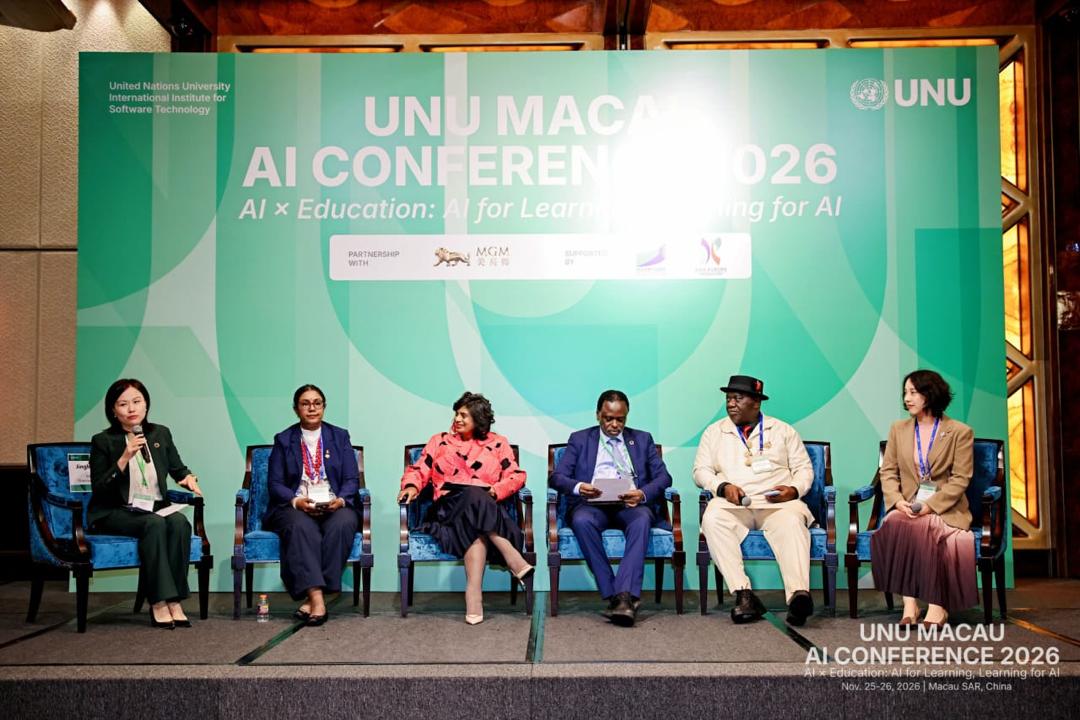
He, however, stressed that AI should complement teachers' work rather than take over their responsibilities.
On examinations and assessment, the Vice-Chancellor cautioned against the uncritical use of AI-generated content, urging both teachers and students to verify and interrogate information before relying on it.
“Put AI answers in parentheses,” he advised, underscoring the importance of critical thinking and information verification.
Prof. Uduma also called for greater African participation in shaping the future of AI, stressing that the continent must not remain a passive consumer of technologies and policies developed elsewhere.
During the question-and-answer session, he acknowledged the growing interest of major technology companies in Africa but maintained that their investments must contribute meaningfully to the continent's development.
Using the expression that investors should “fatten the cow before eating it”, he argued that Africa's people, institutions and systems must be strengthened through sustained investment before commercial interests take precedence.

He identified inadequate electricity, poor internet connectivity, insecurity and weak governance as major obstacles to Africa's effective adoption of AI.
“Without light, there is no learning. Without internet, AI cannot reach the child in a village. Without security, schools and students are not safe. And without good leadership and clear policies, even the best tools will go to waste,” he said.
“Africa requires more infrastructure to be able to keep pace with the developed world,” he added, calling for sustained investment and international support.
Describing AI as a technology that has come to stay, Prof. Uduma said Africa's readiness would largely depend on the capacity of its teachers and educational institutions to adapt.
He emphasised the need for proper teacher training, particularly in developing the skills needed to engage with AI tools effectively and ask the right questions to elicit useful responses.
He further advocated a review of teaching methods, assessment practices and teacher training to reflect the realities of an increasingly AI-driven educational environment. He also called for clear policies to guide engagement with major technology companies.
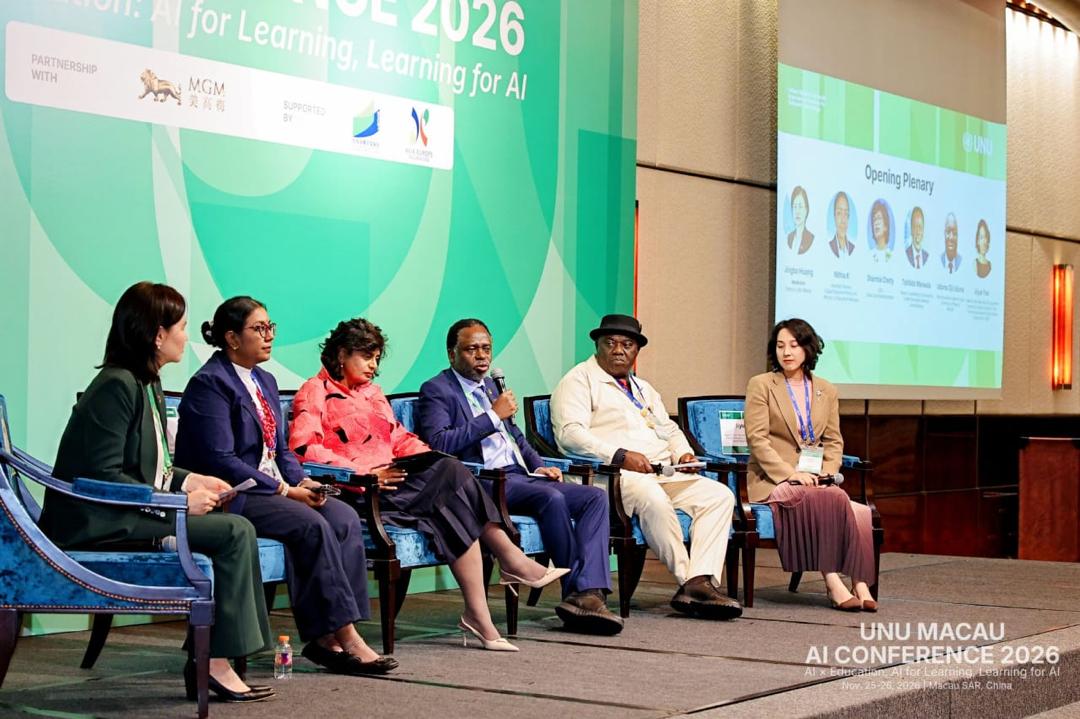
On inclusive education, the Vice-Chancellor stressed that AI must address the needs of underserved populations, including women in remote communities, students with disabilities, working-class learners and mothers who may be unable to attend conventional lectures.
He noted that AI could help overcome barriers relating to language, distance and cost, but warned that its benefits would remain limited if the technologies were not designed to reflect African languages, realities and learning needs.
He therefore urged educational institutions to build their internal capacity, establish appropriate safeguards and ensure that AI adoption did not widen existing inequalities.
Addressing concerns about misinformation, examination malpractice and overdependence on technology, Prof. Uduma advocated stronger human oversight and the integration of critical thinking, information verification and responsible AI use into teaching and learning.
He maintained that AI would transform rather than eliminate the role of teachers, shifting their responsibilities increasingly towards guiding, mentoring and helping students develop independent and critical thinking skills.
He also observed that universities would remain relevant but must rethink their approaches to teaching, assessment and student support to remain responsive to the changing educational landscape.
Prof. Uduma identified effective leadership, teacher training, improved infrastructure, clear regulatory frameworks and research driven by African priorities as essential to ensuring that the continent benefits from the opportunities offered by AI.
With Africa's growing population and increasing demand for flexible and affordable higher education, he said ODL, supported by responsible AI adoption, could play a significant role in expanding access to quality education.
He concluded that the true value of AI in education would not be measured solely by technological advancement but by its ability to promote inclusion, improve learning outcomes and advance human welfare without leaving any learner behind.
- Log in to post comments
- 54 views