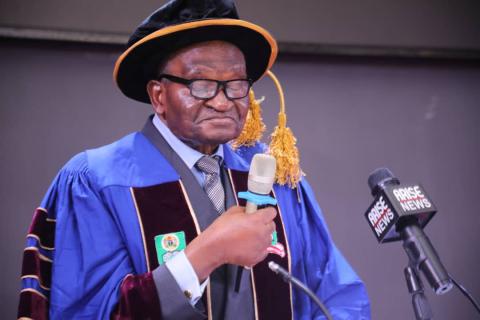
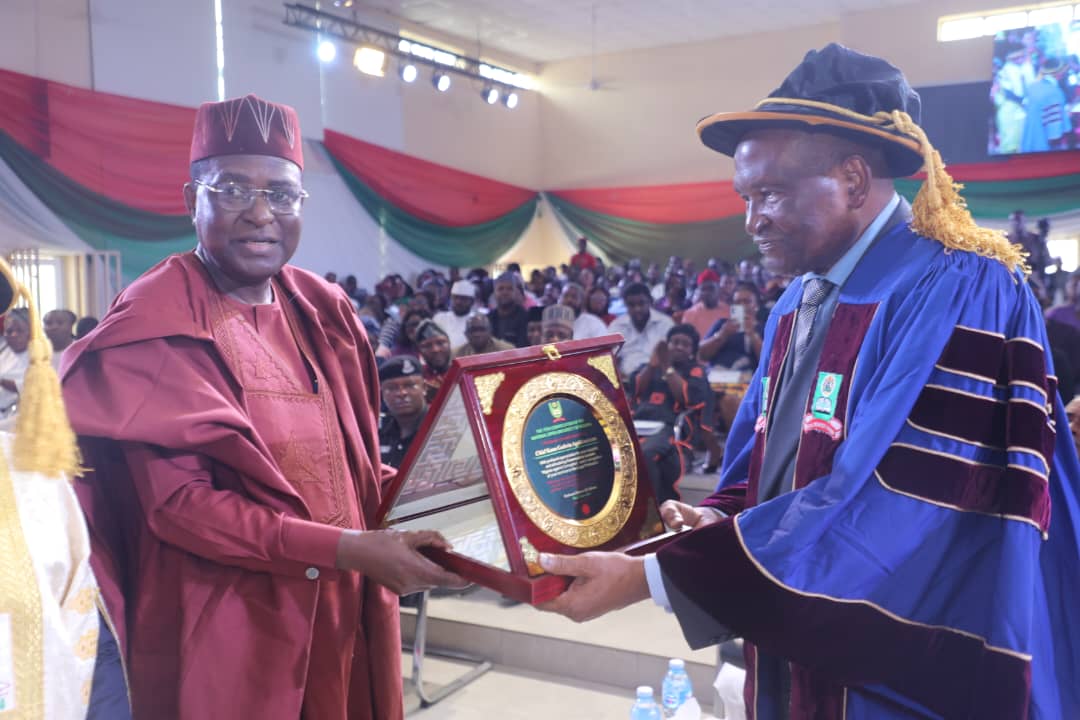
The National Open University of Nigeria (NOUN) has played host to a thought-provoking Convocation Lecture as the former Attorney-General of the Federation and Minister of Justice, Chief Godwin Kanu Agabi, delivered a compelling discourse titled “Nigeria Against Corruption.”
The lecture, held on Friday, April 17, 2026, set the tone for the university’s 15th Convocation Ceremony, which took place on Saturday that witnessed the graduation of 24,575 students from various faculties of the university, including PhD and inmate graduates.
In his lecture, Agabi delivered a reflective and fact-based analysis of corruption in Nigeria, describing it not merely as a legal or institutional problem, but as a moral crisis.
He argued that the persistence of corruption is a reflection of societal values, stressing that laws alone cannot eradicate the menace without a corresponding transformation in individual and collective conscience.
According to him, Nigeria’s struggle against corruption must begin with a reawakening of integrity, discipline and accountability at all levels of society.
Chief Agabi also mentioned that corruption is not merely a moral failing of individuals, but a structural disease that if left unchecked, dismantles the very architecture of the state.
While drawing on decades of experience at the highest levels of Nigeria's legal and governmental establishment, Agabi walked the audience through the stages of corruption, how it begins in petty transactional exchanges, how it scales to institutional capture and how, at its most advanced stage, becomes so normalised within the system that it is no longer seen as deviance but as convention.
Agabi observed that one of the most insidious effects of long running systemic corruption is the inversion of values it produces: the corrupt become admired for their audacity, while the honest are pitied for their naivety.
The former minister argued that Nigeria's legislative framework is not, in itself, deficient. "The statutes are there, the agencies are there, what is absent is the will to enforce consequences consistently and without discrimination."
He challenged the graduating class that their degrees were not merely credentials for economic advancement, but instruments of civic responsibility, saying that the corruption that plagued Nigeria would be perpetuated or dismantled largely by the choices of educated Nigerians.
Agabi further challenged leaders and citizens alike to embrace honesty and self-restraint, noting that the abuse of public trust remains one of the most damaging consequences of corruption.
He called for a return to foundational values such as justice, fairness and service to the common good, warning that without these, efforts to combat corruption would remain ineffective.
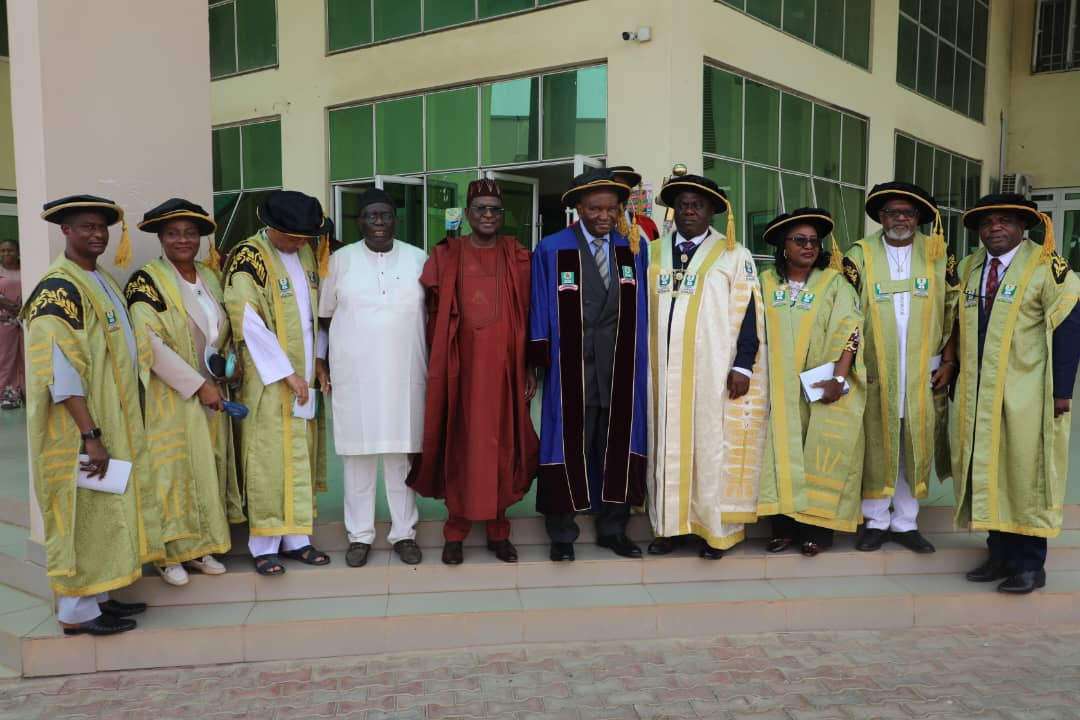
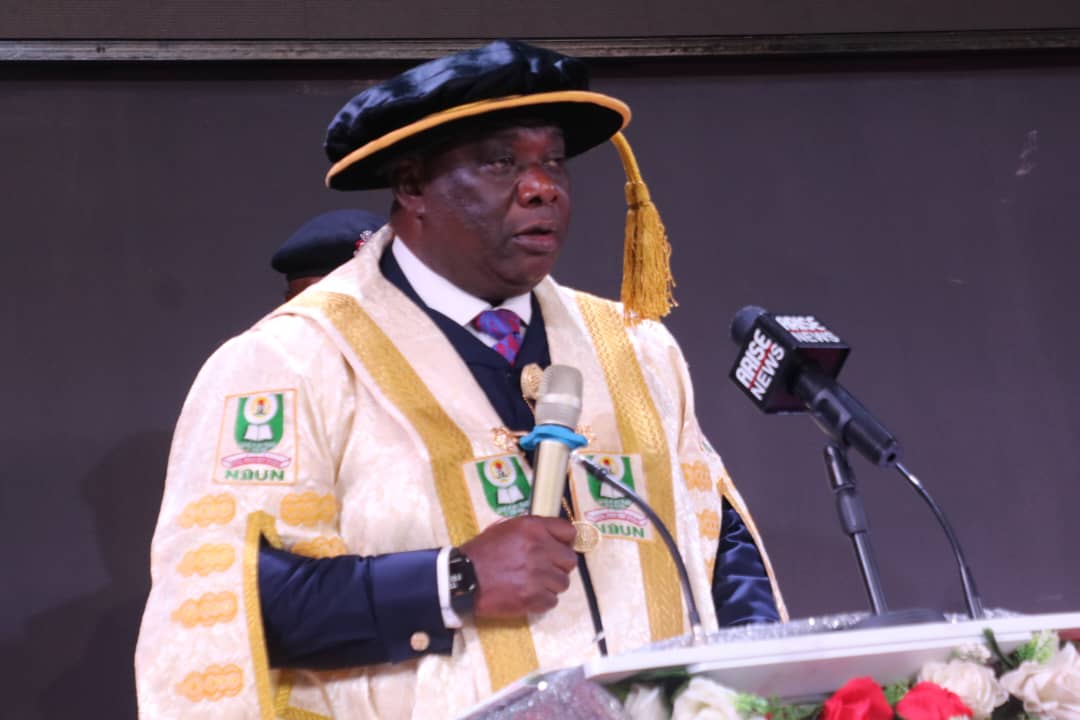
The event had earlier commenced with a welcome address by the Vice-Chancellor, Prof. Uduma Oji Uduma, who provided an insightful overview of the lecture’s theme and emphasised the urgency of confronting corruption as a systemic challenge that continues to undermine Nigeria’s development.
Prof. Uduma noted that beyond policies and institutions, the fight against corruption must be rooted in strong ethical values and collective responsibility, adding that a convocation ceremony is not merely an occasion for the conferment of certificates; it is, more profoundly, a moment in which a university declares its values to society.
In selecting a lecture anchored on corruption, he argued, NOUN was sending an unambiguous signal: that its graduates are not simply trained for careers, but formed for citizenship and that citizenship, in Nigeria's current condition, demands moral courage.
The Vice-Chancellor offered a sweeping overview of the lecture, positioning Chief Agabi as uniquely equipped to navigate it; a man who had not only theorised about justice from the margins of civil society, but had headed Nigeria's legal apparatus and understood, from the inside, both its power and its limitations.
Chairman of the occasion and former Vice-Chancellor of Ahmadu Bello University, Zaria, Prof. Kabir Bala, delivered a keynote address that aligned with the central theme, describing corruption as a major impediment to national progress and called for stronger institutional frameworks, transparency in governance and the promotion of ethical leadership.
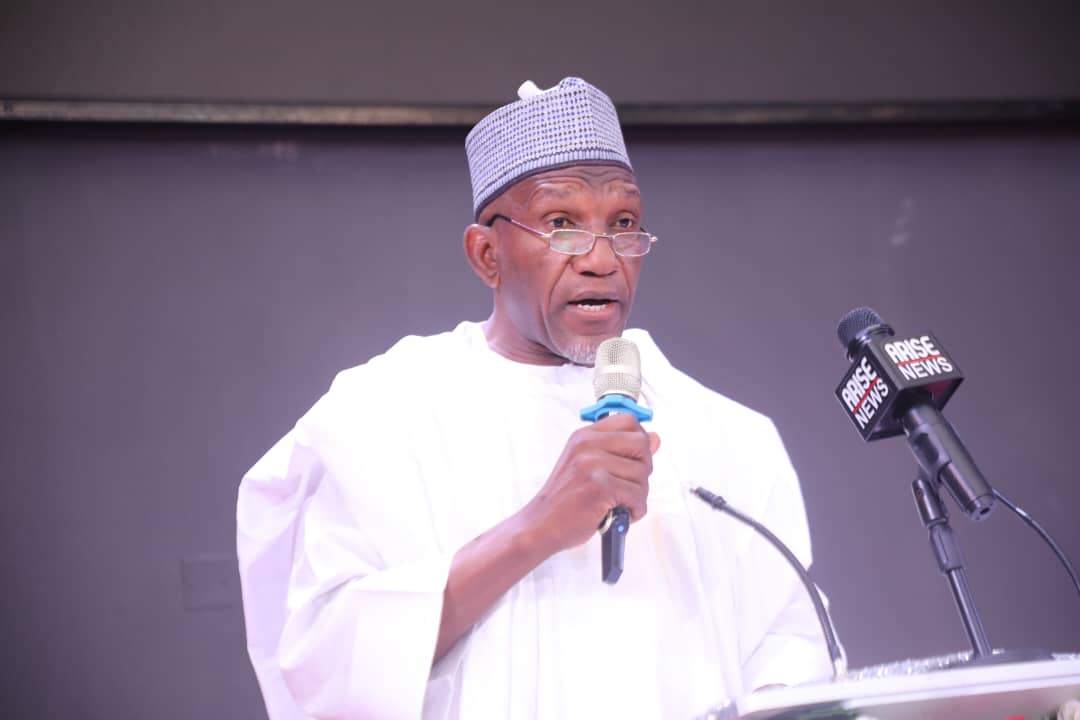
Prof. Bala spoke to the cultural roots of corruption in Nigeria, arguing that any sustainable anti-corruption strategy must reckon with the social incentive structures that make corrupt behaviour rational within certain community systems.
At the end of the lecture, the Vice-Chancellor, Prof. Uduma, commended the guests for their presentations and reaffirmed NOUN’s role as a platform for critical discourse on national development.
Uduma reiterated the university’s commitment to promoting integrity, research and policy dialogue that contribute to Nigeria’s growth and transformation.
- Log in to post comments
- 272 views