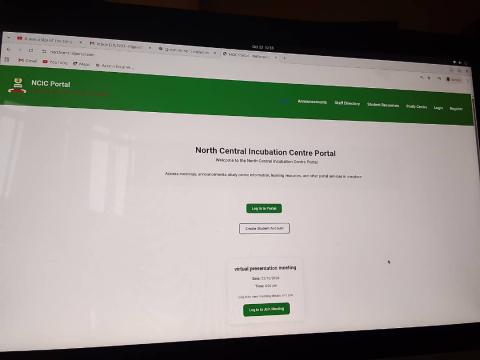
The Director, North-Central Incubation Centre of the National Open University of Nigeria (NOUN), Dr. Madu B. Galadima, has unveiled a dedicated website for GST302 students as part of efforts to enhance communication, improve access to academic resources and expand the Centre's services.
Galadima disclosed that developing the website was one of his first major priorities upon assuming office, explaining that the platform, which he personally developed, would provide GST302 students with easy access to relevant information, announcements, and other learning resources.
He said the website would also facilitate virtual meetings involving students and Desk Officers, thereby reducing the Centre's dependence on Zoom and providing a more accessible channel for communication and engagement.
According to him, the initiative is expected to strengthen information dissemination and improve interaction between the centre and its students.
Beyond the digital intervention, Galadima said his administration was committed to repositioning the centre to fulfil its broader mandate of promoting entrepreneurship, innovation and practical skills acquisition, rather than limiting its activities to business plan development.
He disclosed plans to establish partnerships with institutions such as the Bank of Industry, North-East Development Commission (NEDC) and other relevant small and medium enterprise development agencies to organise vocational training programmes for artisans and interested members of the public.
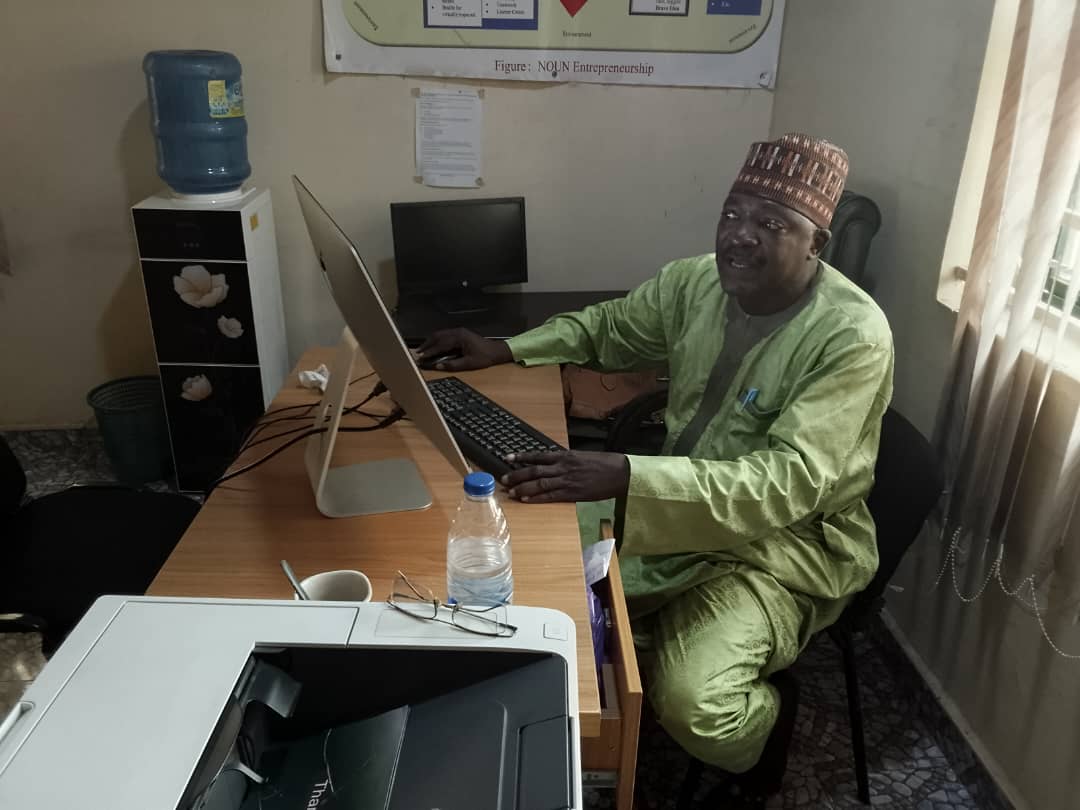
The Director explained that the Centre had facilities, including welding and sewing machines, as well as equipment for producing shoes, bags and other items, which could be deployed to equip participants with practical skills and prepare them for self-employment.
He particularly emphasised the need to empower persons displaced by insurgency and terrorism in the North-East, many of whom had lost their livelihoods and means of supporting their families.
According to him, some of the affected persons were formerly skilled artisans, including plumbers, carpenters, electricians and shoemakers, whose livelihoods had been disrupted by years of displacement and hardship.
Galadima said the centre could collaborate with the NEDC and other relevant organisations to identify such individuals, retrain them in their respective trades, provide psychological support and facilitate their reintegration into society.
Under the proposed arrangement, he explained, development partners could support beneficiaries with tools, equipment and workshops after their training, enabling them to re-establish their businesses, regain economic independence and contribute meaningfully to society.
He added that the proposed skills acquisition programmes would not be limited to displaced persons, as other interested members of the public would also be eligible to participate in vocational training courses lasting between four and six weeks, with certificates awarded upon completion.
The Director further noted that participants could explore opportunities to access loans from the Bank of Industry to establish or expand small businesses, stressing that small and medium-scale enterprises remained vital to economic growth and development.
However, Galadima expressed concern that some of the centre's facilities and equipment had remained underutilised for about five years, attributing the situation partly to inadequate appreciation of its broader mandate.
He said he had initiated efforts to repair the faulty equipment and restore some of the facilities but stressed that additional support from the university management was necessary to fully realise the centre's objectives.
Galadima expressed optimism that with sustained support from the university management and strategic partnerships with relevant institutions, the North-Central Incubation Centre could be transformed into a hub for entrepreneurship development, vocational training, innovation and community empowerment.
He stressed that the successful implementation of the centre's mandate would require a shared understanding of its responsibilities and sustained institutional commitment.
- Log in to post comments
- 81 views