The National Open University of Nigeria (NOUN) has reaffirmed its commitment to transparency, accountability and ethical governance with the inauguration and induction of newly-appointed members of its Anti-Corruption and Transparency Unit (ACTU) Committee.
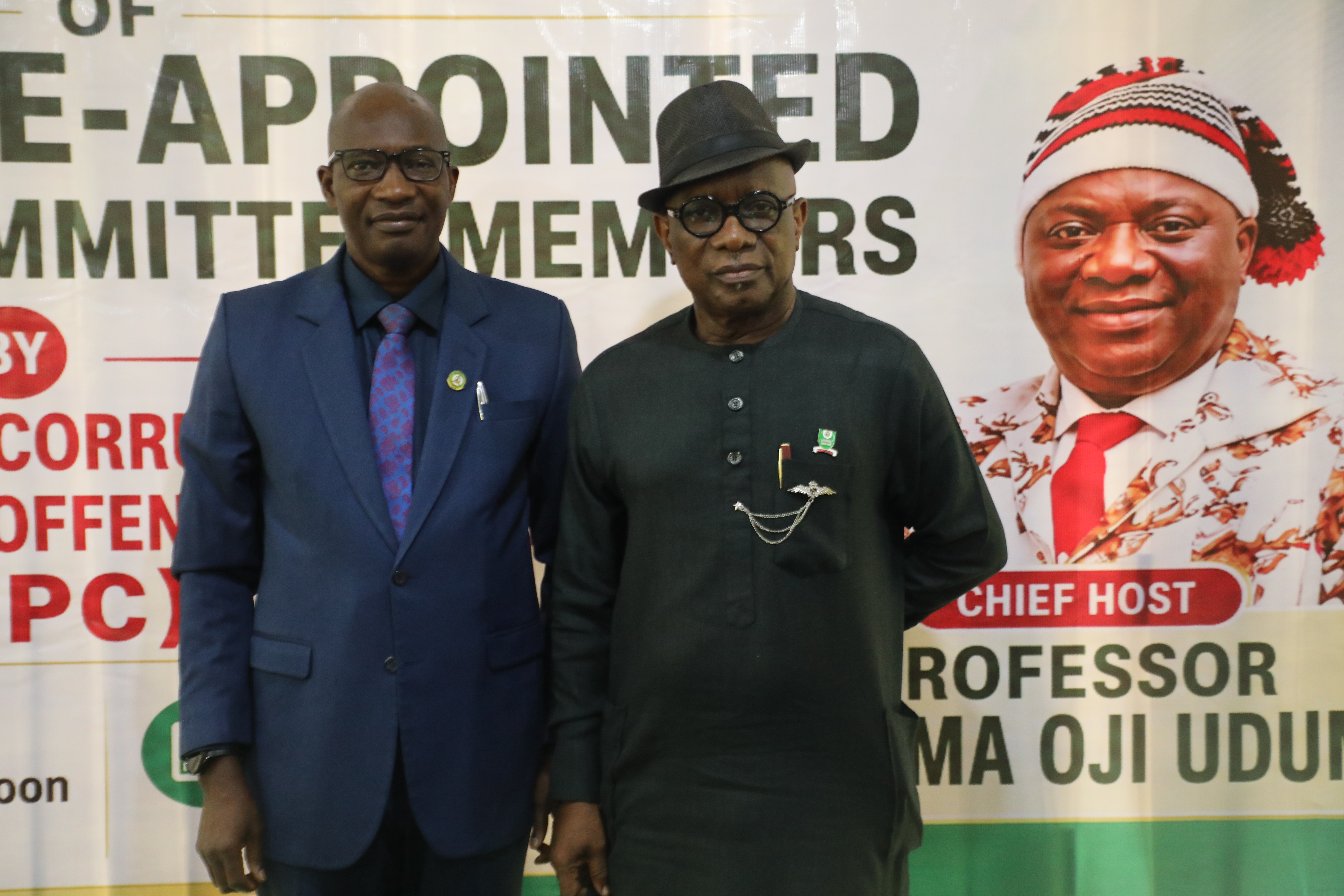
The induction ceremony, held on Thursday, June 11, 2026, brought together the university's principal officers, officials of the Independent Corrupt Practices and Other Related Offences Commission (ICPC), members of the ACTU Committee, and other stakeholders committed to promoting integrity within the institution.
In his welcome address, the Vice-Chancellor, Prof. Uduma Oji Uduma, delivered on his behalf by the Dean Of Postgraduate Studies; Professor Sonnie Oniye, emphasised the strategic importance of ACTU in strengthening the culture of accountability and transparency across the university.
He described the event as a landmark occasion that reflects NOUN's unwavering commitment to ethical governance and institutional responsibility.
The Vice-Chancellor acknowledged the longstanding partnership between NOUN and the ICPC, noting that the relationship has remained strong since the establishment of the university's ACTU in 2007.
According to him, the presence of ICPC officials at the induction ceremony demonstrated the strength of that partnership and the shared commitment of both institutions to promoting integrity in public service.
Prof. Uduma stated that supporting ACTU is not merely an administrative requirement but a core priority of the university management.
He commended the outgoing committee for its achievements and expressed confidence in both the reappointed and newly inducted members.
The VC explained that the reappointment of some members was a recognition of their proven integrity, dedication and positive contributions, while the inclusion of new members reflected management's confidence in their ability to bring fresh ideas and perspectives to the unit.

The Vice-Chancellor further assured the committee of continuous institutional support, stressing that management would continue to provide the enabling environment necessary for the unit to effectively discharge its responsibilities without fear or favour.
Professor Uduma highlighted the unique position of NOUN as Africa's premier Open and Distance Learning institution, with a nationwide operational structure that spans numerous study centres across Nigeria.
He noted that maintaining consistent standards of accountability across such a vast system presents peculiar challenges, explaining that the university's technology driven structure provides a strong foundation for preventing unethical practices.
According to him, technology remains one of the institution's most effective tools for reducing unnecessary human interference, promoting transparency, ensuring traceability and minimizing opportunities for corruption.
However, he explained that the university's technology driven structure provides a strong foundation for preventing unethical practices.
According to Prof. Uduma, technology remains one of the institution's most effective tools for reducing unnecessary human interference, promoting transparency, ensuring traceability and minimizing opportunities for corruption.
He stressed that strict compliance with due process must remain non-negotiable in key areas such as admissions, examinations, procurement, recruitment and financial management.
The Vice-Chancellor also emphasized that modern anti-corruption strategies must move beyond punitive measures and focus more on prevention, education, sensitization and institutional reforms.
Addressing the newly inducted committee members, he described their appointment as a sacred call to service and urged them to uphold courage, fairness, confidentiality and objectivity in carrying out their duties.,
He further stressed the importance of responsible whistleblowing, encouraging ACTU members to create a safe environment where staff and students can report misconduct while ensuring that all reports are carefully verified and professionally handled..
"The responsibility of building an integrity driven institution belongs to all members of the university community," he noted. "However, ACTU members must serve as the standard bearers who lead by example."
Delivering the goodwill message of the Chairman of the ICPC, Dr. Musa Adamu Aliyu, SAN, the Director, System Study and Review Department; Mr. Olusegun Adigun commended the management of NOUN for its commitment to strengthening anti-corruption structures within the institution.
He described the inauguration and induction as an important step in preparing ACTU members for the responsibilities ahead.
He explained that although ACTUs were initially established through a collaboration between the ICPC and the Office of the Head of the Civil Service of the Federation, they have since evolved into government recognized anti-corruption platforms within Ministries, Departments and Agencies.
According to him, ACTUs serve as internal mechanisms for identifying systemic weaknesses, promoting ethical standards and addressing vulnerabilities that may create opportunities for corruption.
He noted that the activities of ACTU align closely with NOUN's vision of providing accessible, high-quality education built on the principles of social justice, equity, equality and national cohesion.
Mr. Adigun outlined several key responsibilities of ACTU, including staff sensitization and training on anti-corruption principles, examination of systems and procedures vulnerable to corruption, conduct of Corruption Risk Assessments, development and enforcement of ethical codes, monitoring of budget implementation, deployment of integrity compliance tools and preliminary investigation of complaints and reports.

He emphasized that ACTU is not intended to compete with university management but rather to complement management's efforts by strengthening transparency and accountability mechanisms.
To achieve this objective, he called on the university management to continue supporting the committee through adequate funding, provision of office facilities and representation in relevant standing committees in accordance with government guidelines.
Congratulating the newly inducted members, Mr. Adigun urged them to discharge their responsibilities with integrity, professionalism, and diligence, advising them to avoid actions that could compromise the credibility of the unit or undermine the confidence placed in them.
The ICPC representative also reaffirmed the Commission's commitment to sustaining its collaboration with NOUN in advancing transparency and accountability within the public sector.
Responding on behalf of the committee, the Head NOUN ACTU, Mrs. Doris C.L Nzenwa, expressed gratitude to the university management and the ICPC for their continued support and confidence in the committee.
She described the induction ceremony as both a reaffirmation of past commitments and the beginning of a renewed journey toward strengthening ethical standards within the university.
Mrs. Nzenwa, who was reappointed to lead the committee, said the responsibility entrusted to the members goes beyond a ceremonial appointment and represents a commitment to integrity, accountability, and service.
She thanked the Vice-Chancellor and university management for providing the institutional backing that enabled the committee to record significant achievements during the previous tenure.
She also acknowledged the role of the ICPC in guiding and supervising the university's ACTU since its establishment in 2007.
According to her, ACTU remains a vital link between NOUN and the ICPC in promoting ethical conduct, preventing corruption and strengthening accountability mechanisms across the institution.
She described the committee as the watchdog of integrity and transparency within the university community.
Mrs. Nzenwa noted that maintaining transparency in a nationwide institution such as NOUN requires continuous innovation and vigilance. She stressed the need to strengthen digital systems that reduce human interference and promote accountability in critical areas including admissions, examinations, procurement and financial management.
She reiterated that prevention, enlightenment and awareness must remain central pillars of the university's anti-corruption strategy.
Mrs.Nzenwa also highlighted the importance of whistleblowing and public awareness, noting that staff and students must be educated on secure channels for reporting misconduct such as examination malpractice, abuse of office, extortion and certificate racketeering.
At the same time, she emphasized the need for confidentiality, fairness and verification in handling reports to protect genuine whistleblowers while preventing malicious allegations.
She further stressed that safeguarding the integrity of the university is a collective responsibility involving management, staff, students and the ICPC.
Addressing her fellow committee members, she reminded them that the assignment demands courage, fairness, discretion and strong moral character.
"We are ambassadors of accountability and partners in the sustainable development of Africa's premier Open and Distance Learning university," she said.
The induction of the new and reappointed ACTU members marks another significant step in NOUN's ongoing efforts to institutionalize transparency, accountability and ethical governance.
With the continued partnership between NOUN and the ICPC, both institutions expressed confidence that the university will remain a model institution in promoting integrity and good governance within Nigeria's higher education sector.
- Log in to post comments
- 484 views