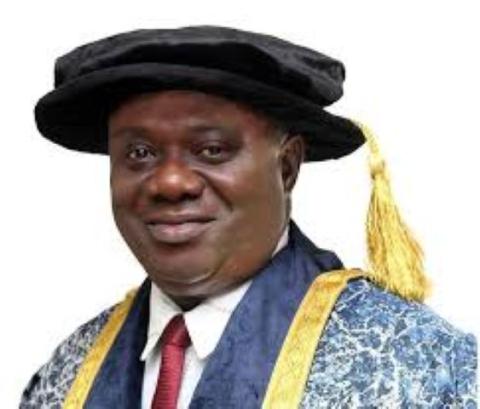
With the abolition of application fees, the National Open University of Nigeria (NOUN) Vice-Chancellor, Prof. Uduma Oji Uduma, is taking a bold step towards dismantling financial barriers and making university education more accessible to Nigerians.
For thousands of Nigerians who aspire to pursue university education but are constrained by financial difficulties, the National Open University of Nigeria has offered a fresh reason to reconsider their academic ambitions. In a significant policy shift, the university has abolished application fees for all its programmes, making the admission application process free.
The decision, announced by the Vice-Chancellor, Professor Uduma Oji Uduma, at the conclusion of the university's 127th Management Meeting on Tuesday, November 10, 2026, represents an important milestone in NOUN's continuing efforts to expand access to higher education and eliminate barriers that may discourage prospective students from pursuing their academic dreams.
Under the new policy, prospective candidates seeking admission into undergraduate, Postgraduate Diploma and Master's programmes will no longer be required to pay application fees. The policy takes immediate effect and will commence with the 2027_1 admission exercise.
While the announcement may appear to be a simple adjustment to the university's admission procedure, its implications are far-reaching. For a prospective student struggling to meet basic financial obligations, the cost of an admission application, however modest, can constitute another hurdle in the pursuit of education. Removing this cost sends a clear message: the opportunity to seek higher education should not be restricted by the inability to pay an application fee.
This is where Professor Uduma's decision stands out as a potentially game-changing intervention. It demonstrates a willingness to look beyond established administrative practices and introduce policies that directly address the realities confronting prospective students. Rather than merely preaching inclusiveness, his administration is taking a practical step towards making it a reality.
Indeed, the decision is firmly rooted in NOUN's founding philosophy of widening access to university education through an open and flexible learning system. Since its establishment, the university has provided opportunities for Nigerians who, for various personal, professional, geographical and economic reasons, may be unable to pursue conventional university education.
Working-class Nigerians, business owners, parents, young school leavers, persons with disabilities and individuals seeking to improve their academic qualifications have all benefited from the opportunities offered by the university's flexible academic structure. Its open and distance learning model continues to challenge the limitations of conventional higher education by enabling students to study at their own pace and from different locations.
However, access to education does not begin in the classroom or at the point of registration. It begins with the opportunity to apply. By abolishing application fees, NOUN has extended its accessibility philosophy to the very first stage of the admission process.
For a young Nigerian who has just completed secondary education, a civil servant seeking career advancement, an entrepreneur looking to acquire additional qualifications, or an individual hoping to return to formal education after several years, the new policy removes another financial consideration from the decision to pursue a university education.
Beyond the immediate financial relief it offers prospective applicants, the intervention can also attract more Nigerians to explore the academic opportunities available at NOUN. Eliminating application fees makes the admission process more welcoming, lowers the initial cost of seeking admission, and reinforces the university's position as an institution committed to taking education beyond the limitations of conventional university systems.
For Professor Uduma, the policy provides a compelling example of how leadership can translate an institutional mandate into practical outcomes. Transformational leadership is not measured solely by major infrastructure projects, administrative reforms, or public declarations. It is equally reflected in decisions that remove everyday obstacles, create opportunities and improve people's access to essential services.
The abolition of application fees is therefore more than an adjustment to admission procedures. It is a statement of institutional purpose and an acknowledgment that expanding access requires a deliberate examination of the barriers standing between people and educational opportunities.
As the university prepares for its 2027_1 admission exercise, attention must now turn to effective implementation. The policy needs to be widely publicised and consistently applied across all admission channels to ensure that prospective students, regardless of their location or circumstances, are fully aware of the opportunity. Equally important is the need to sustain the academic standards and quality that underpin the university's programmes.
Ultimately, Professor Uduma's decision reinforces a fundamental principle: the doors of higher education should remain open to all who aspire to learn, develop their potential and improve their lives. By removing the financial requirement for submitting an admission application, NOUN has taken another meaningful step towards making that aspiration attainable.
In a society where access to education can shape individual destinies and influence national development, the policy carries a human face and a message that resonates far beyond the university community.
Through this decision, Professor Uduma has made a defining statement about the direction of NOUN: the first step towards pursuing a university education should not be obstructed by an application fee.
Debbie Nduba is a staff member of the Directorate of Media and Publicity, National Open University of Nigeria (NOUN).
- Log in to post comments
- 172 views